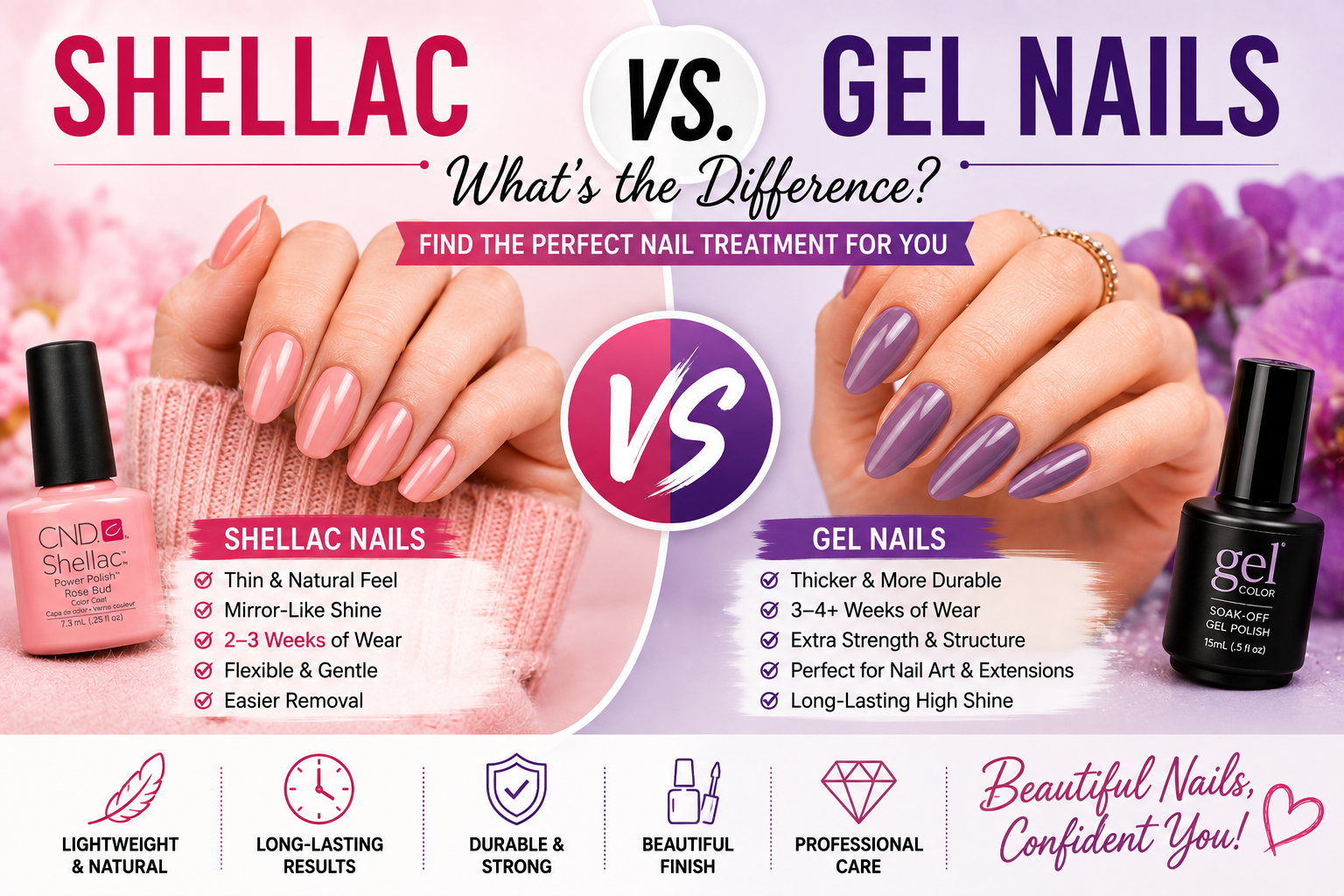
If you’re looking for a manicure that stays glossy and beautiful longer than traditional nail polish, you’ve probably come across Gel nails and Shellac nails. Both are popular salon choices because they offer excellent shine, durability, and a polished appearance. But despite their similarities, Gel and Shellac aren’t exactly the same.
So, which one should you choose?
The answer depends on what you’re looking for in a manicure. Shellac may be ideal if you prefer a lightweight, natural feel, while Gel can be a better option if you want extra strength, durability, or more flexibility for nail enhancements.
If you’re considering your next manicure at Yen Nails in Aurora, this guide will help you understand the difference between Gel and Shellac nails and choose the option that best fits your lifestyle.
Shellac is a hybrid nail product that combines characteristics of traditional nail polish and gel. It is applied in thin layers and cured under a specialized lamp to create a durable, glossy finish.
One of the main reasons clients like Shellac is its lightweight feel. Compared with some Gel applications, Shellac can look and feel closer to natural nail polish while providing considerably longer-lasting wear.
Shellac can be a good choice if you want:
Shellac is particularly appealing to clients who want polished nails without a thick or heavily structured appearance.
Gel nails use a gel-based product that is cured under an LED or UV lamp. Depending on the service, Gel can be applied over natural nails or used for overlays and extensions.
Gel is known for creating a stronger and more structured finish. It’s also highly versatile, making it popular for clients who want additional durability or creative nail designs.
Gel may be a great option if you want:
The exact results and longevity can vary depending on the specific Gel system, application technique, nail condition, and aftercare.
The easiest way to understand the difference is to think about formula, structure, durability, and intended use.
Shellac is generally thinner and more polish-like, while Gel tends to provide greater structure and can be used for a wider range of nail enhancements.
Here’s a quick comparison:
| Feature | Shellac Nails | Gel Nails |
|---|---|---|
| Feel | Lightweight | More structured |
| Appearance | Natural and glossy | Glossy and substantial |
| Durability | Excellent | Excellent to very high |
| Flexibility | More flexible | More structured |
| Nail art | Great for classic designs | Excellent for detailed designs |
| Extensions | Generally not designed for extensions | Can be used for extensions |
| Removal | Generally easier | Can require more time |
| Best for | Natural, polished look | Strength, durability and creativity |
If longevity is your main concern, both treatments can offer significantly longer wear than regular nail polish.
A Shellac manicure commonly lasts around two to three weeks, while Gel manicures may last around three to four weeks or longer, depending on nail growth, lifestyle, application quality, and maintenance.
However, longer wear isn’t always the only consideration.
If you prefer changing your nail color more frequently, Shellac may be more convenient. If you want to go longer between appointments, Gel may better suit your routine.
Shellac generally has an advantage if you want a thin, natural-looking manicure.
Because the product can be applied in relatively thin layers, the finished nails can retain a more natural appearance while still providing glossy color.
Gel can also look very natural when professionally applied. However, it can provide a more structured appearance, particularly when used for overlays or extensions.
For a lightweight, natural look: Shellac may be the better choice.
For structure and enhancement: Gel may be preferable.
Gel generally provides more structure than Shellac.
This makes Gel an attractive choice for clients who want additional support, overlays, or extensions. It’s also popular for creating longer nail shapes and more elaborate designs.
Shellac is better suited to clients who primarily want long-lasting colour and shine on their natural nails.
It’s important to remember that neither product should be considered a substitute for healthy nail care. Proper preparation, application, curing, and removal are essential.
If you love experimenting with nail designs, Gel can offer more versatility.
Gel services can be used for:
Shellac is also suitable for beautiful nail art, particularly classic French manicures, solid colors, minimalist designs, and elegant seasonal styles.
If your priority is creative freedom and nail enhancement, Gel may have the advantage.
Removal is an important part of nail health.
Traditional polish is usually the easiest to remove. Shellac is generally designed to soak off relatively easily when the appropriate removal process is followed.
Gel removal can be more involved depending on the product. Some systems require soaking, filing, or a combination of techniques.
The most important rule is simple:
Never peel or forcefully remove Gel or Shellac from your nails.
Pulling off the product can remove layers of the natural nail and potentially leave the nail surface thin or damaged.
Professional removal is the safer choice.
Your daily routine can help determine which manicure makes more sense.
Whichever treatment you choose, aftercare matters.
Use cuticle oil or hand moisturizer regularly to keep the skin around your nails comfortable and well-conditioned.
Household cleaning products and prolonged exposure to water can affect your manicure. Gloves provide an extra layer of protection.
Avoid opening packages, scraping labels, or prying objects with your nails. These habits can cause lifting, cracking, and breakage.
If your manicure begins to lift, don’t peel it off. Arrange professional removal or maintenance instead.
As your natural nails grow, the gap between the product and cuticle becomes more noticeable. Regular maintenance can keep your manicure looking neat and help prevent problems associated with excessive growth or lifting.
There isn’t one universal winner.
The health of your nails depends heavily on proper preparation, professional application, appropriate curing, and correct removal.
Aggressive filing, picking, or peeling can cause more problems than the choice between Gel and Shellac itself.
If your natural nails are currently weak, damaged, or experiencing unusual changes, consider discussing them with a qualified professional before receiving a nail enhancement service.
Choosing the right nail salon is just as important as choosing between Gel and Shellac.
At Yen Nails Aurora, professional nail care is focused on helping clients achieve polished, attractive results while making their salon experience comfortable and enjoyable.
The salon is located at 130 Hollidge Blvd, Aurora, Ontario, and provides manicure and Gel-related services for clients in Aurora and nearby communities.
Whether you’re interested in a lightweight Shellac manicure or a more structured Gel service, discussing your preferred nail length, shape, finish, and maintenance schedule with your nail technician can help you select the most appropriate treatment.
So, Gel nails vs. Shellac nails—which one is better?
There isn’t a single answer for everyone.
Choose Shellac if you want:
Choose Gel if you want:
Both can be excellent choices when professionally applied and properly maintained. The right option ultimately comes down to your lifestyle, nail goals, preferred appearance, and maintenance routine.
If you’re still unsure, speak with a nail professional before your appointment. The team at Yen Nails Aurora can help you determine which manicure best suits your individual preferences.