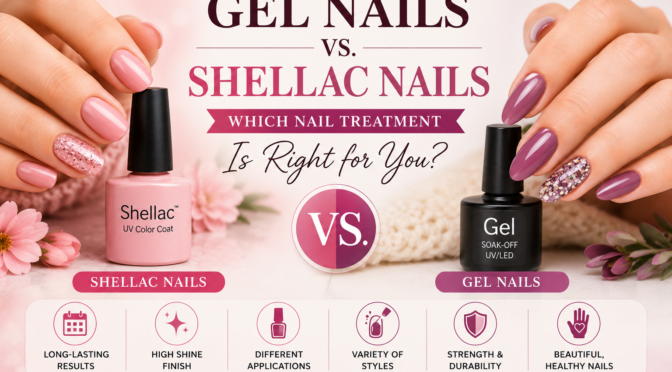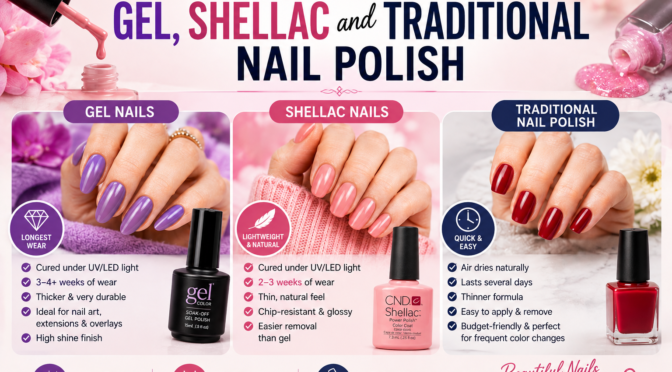
When you’re booking a manicure, choosing a nail colour is only part of the decision. You may also need to decide which type of nail polish or treatment is right for you. Traditional nail polish, Shellac, and Gel can all create beautiful nails, but they differ in application, durability, appearance, removal, and maintenance.
If you’re unsure which option to choose, understanding these differences can make your next salon appointment much easier.
At Yen Nails in Aurora, clients can choose professional nail services based on their preferred look and maintenance needs. The salon is located at 130 Hollidge Blvd in Aurora, Ontario.
Here’s a closer look at traditional nail polish vs. Shellac vs. Gel nails.
What Is Traditional Nail Polish?
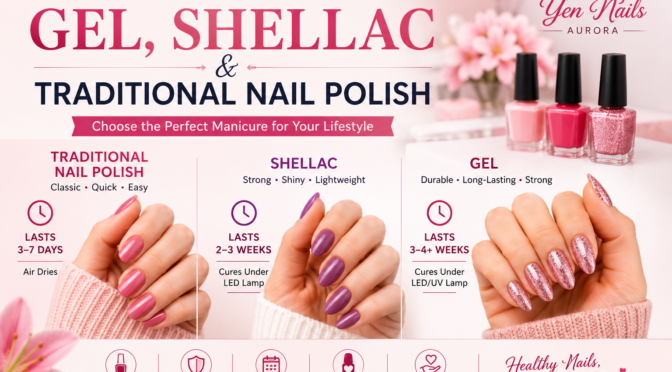
Traditional nail polish is the classic manicure option most people know. It is brushed onto the natural nail, typically over a base coat and followed by a top coat. Unlike Gel and Shellac, regular polish dries through exposure to air rather than being cured under a lamp.
One of its biggest advantages is flexibility. You can change your nail colour whenever you want without committing to a longer-lasting treatment.
Benefits of Traditional Nail Polish
Traditional polish is a good option if you:
- Like changing colours frequently
- Want a simple manicure
- Prefer easy removal
- Are looking for a budget-friendly option
- Want a manicure for a special occasion or short-term wear
The main disadvantage is durability. Traditional polish generally chips sooner than Shellac or Gel, particularly if your hands are frequently exposed to water, cleaning products, or physical activity.
What Is Shellac?
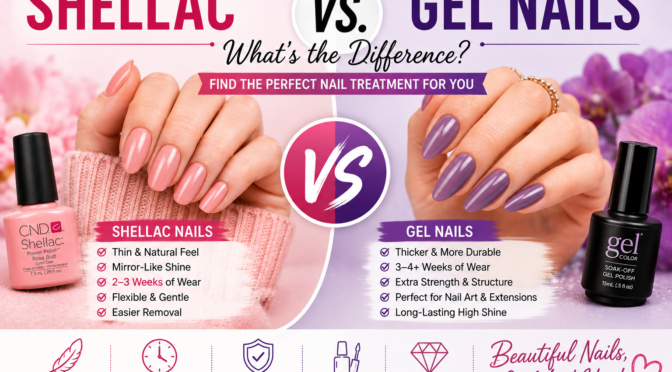
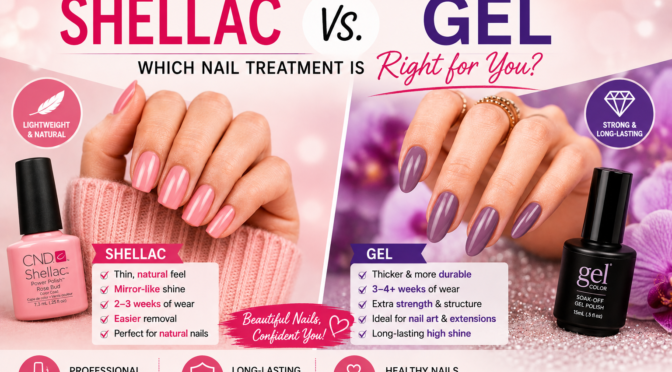
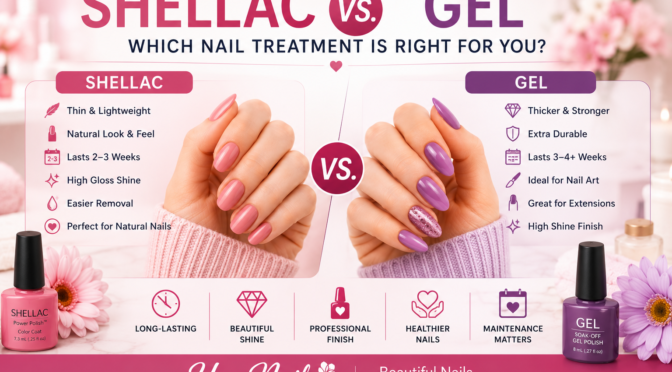
Shellac is a hybrid nail product that combines characteristics of traditional nail polish with gel technology. It is applied in thin layers and cured under a lamp, giving it a glossy, durable finish.
Because Shellac is relatively thin, it can provide a more natural feel than some thicker Gel applications. Yen Nails Aurora’s existing information describes Shellac as lightweight, glossy, chip-resistant, and generally capable of lasting around two to three weeks.
Benefits of Shellac
Shellac may be a good choice if you want:
- A lightweight manicure
- A natural-looking finish
- Long-lasting colour
- High shine
- Better chip resistance than traditional polish
- A relatively straightforward removal process
It’s particularly appealing for people who want polished, professional-looking nails without a heavily structured appearance.
What Are Gel Nails?
Gel nails use a gel-based product that is cured under an LED or UV lamp. Depending on the service, Gel can be applied to natural nails or used for overlays and extensions.
Gel is generally thicker and more structured than traditional polish and Shellac, making it popular among clients who want greater durability or additional support for their nails.
Yen Nails Aurora notes that Gel manicures can provide approximately three to four weeks or longer of wear, depending on factors such as nail growth and lifestyle.
Benefits of Gel Nails
Gel may be ideal if you want:
- Stronger-looking nails
- Long-lasting wear
- A high-gloss finish
- More structured nails
- Detailed nail art
- Overlays or extensions
- Greater flexibility with nail length and shape
Traditional Polish vs. Shellac vs. Gel: At a Glance
| Feature | Traditional Polish | Shellac | Gel |
|---|---|---|---|
| Application | Air-dried | Lamp-cured | Lamp-cured |
| Feel | Very lightweight | Lightweight | More structured |
| Typical wear | Several days | About 2–3 weeks | About 3–4+ weeks |
| Shine | Good | High | High |
| Chip resistance | Lower | High | Very high |
| Removal | Easy | Generally easier | Usually more involved |
| Nail art | Good | Good | Excellent |
| Extensions | No | Generally no | Yes, depending on system |
| Best for | Frequent colour changes | Natural, long-lasting colour | Durability and nail enhancements |
Wear time varies according to the individual, application, nail growth, and aftercare.
Which One Lasts the Longest?
If longevity is your primary concern, Gel generally offers the longest wear of the three.
Traditional polish may begin showing chips within days, while Shellac can provide a polished appearance for approximately two to three weeks. Gel can often remain attractive for three to four weeks or longer.
However, longer-lasting doesn’t automatically mean better.
If you enjoy changing your nail colour regularly, traditional polish might actually suit you better. If you want long-lasting colour without much added structure, Shellac could be the ideal middle ground.
Which Has the Most Natural Look?
For a lightweight, natural-looking manicure, traditional polish and Shellac are popular options.
Traditional polish adds minimal product to the nail. Shellac can offer a similar polished appearance while providing greater durability.
Gel can also look natural when professionally applied, but its structured finish may be more noticeable, particularly when used for overlays or extensions.
Which Is Strongest?
Gel generally provides the greatest structure and reinforcement.
This makes Gel particularly useful for clients interested in:
- Nail extensions
- Longer nail shapes
- Overlays
- Detailed nail art
- Additional structure
Shellac is thinner and more flexible, so it is better suited to clients who primarily want durable colour rather than significant nail enhancement.
Which Is Best for Nail Art?
All three options can be used for attractive nail designs, but Gel tends to provide the most versatility.
Traditional polish works beautifully for simple designs and classic colours. Shellac is excellent for elegant styles such as French manicures, solid colours, and minimalist designs.
Gel can be particularly useful for more elaborate looks, including:
- Ombre
- Chrome effects
- Rhinestones
- Intricate artwork
- Sculpted styles
- Extensions
If you’re planning a special event and want a more creative manicure, discussing your design with your nail technician beforehand can help determine which treatment is most appropriate.
What About Removal?
Removal is an important part of maintaining healthy-looking nails.
Traditional nail polish is generally the simplest to remove. Shellac is designed to be removed through an appropriate professional removal process, while Gel removal can be more involved depending on the specific product and application.
The most important rule is never peel or pick off Shellac or Gel yourself. Pulling product away from the natural nail can remove layers of the nail surface and contribute to damage.
Professional removal is a better option when you’re ready for a new manicure.
Which Treatment Is Right for Your Lifestyle?
Your daily routine can help determine the best choice.
Choose Traditional Polish If You:
- Love changing colours
- Want easy removal
- Need a short-term manicure
- Prefer a classic nail polish experience
- Don’t mind occasional touch-ups
Choose Shellac If You:
- Want lightweight nails
- Prefer a natural-looking finish
- Want colour that lasts for weeks
- Like glossy, elegant styles
- Prefer a manicure with less structure
Choose Gel If You:
- Want maximum durability
- Prefer stronger, structured nails
- Love detailed nail art
- Want extensions or overlays
- Have a busy lifestyle
- Want more flexibility with nail length and shape
How to Keep Your Manicure Looking Its Best
Regardless of which treatment you select, proper aftercare can help extend the life of your manicure.
Moisturize Your Hands and Cuticles
Regularly applying hand cream and cuticle oil can help keep the skin around your nails looking healthy and well cared for.
Wear Gloves for Household Chores
Cleaning products and prolonged water exposure can affect nail products. Wearing gloves when washing dishes or cleaning can provide additional protection.
Don’t Use Your Nails as Tools
Avoid opening packages, scraping surfaces, or prying objects with your nails. These habits can contribute to chipping, lifting, or breakage.
Don’t Pick at Your Manicure
If you notice lifting or damage, don’t pull at the product. Arrange professional maintenance or removal instead.
Follow a Regular Maintenance Schedule
As your natural nails grow, the gap between your cuticle and manicure becomes more noticeable. Regular appointments can help keep your nails looking neat and polished.
Why Professional Nail Care Matters
The product itself isn’t the only factor that determines how your manicure looks and lasts. Preparation, application, curing, and removal technique all matter.
Yen Nails Aurora emphasizes professional nail care, Shellac and Gel services, customized nail designs, quality products, and hygienic salon practices.
A professional technician can also help you decide which treatment makes sense for your natural nails and lifestyle.
If you’re in Aurora and want to compare your options in person, Yen Nails Aurora can help you find a manicure style suited to your preferences.
Final Thoughts
So, what’s the difference between Gel, Shellac, and traditional nail polish?
Traditional polish is ideal for people who want affordability, easy removal, and the freedom to change colours frequently. Shellac is a great middle ground, offering a lightweight feel, glossy finish, and longer-lasting colour. Gel is generally the better option for clients who prioritize durability, strength, nail art, extensions, or a more structured appearance.
There is no single treatment that’s best for everyone. Your lifestyle, nail goals, desired appearance, and maintenance preferences should all play a role in your decision.
If you’re still unsure, talk to a professional nail technician before your appointment. The right advice can help you choose a manicure that looks beautiful while fitting naturally into your routine.